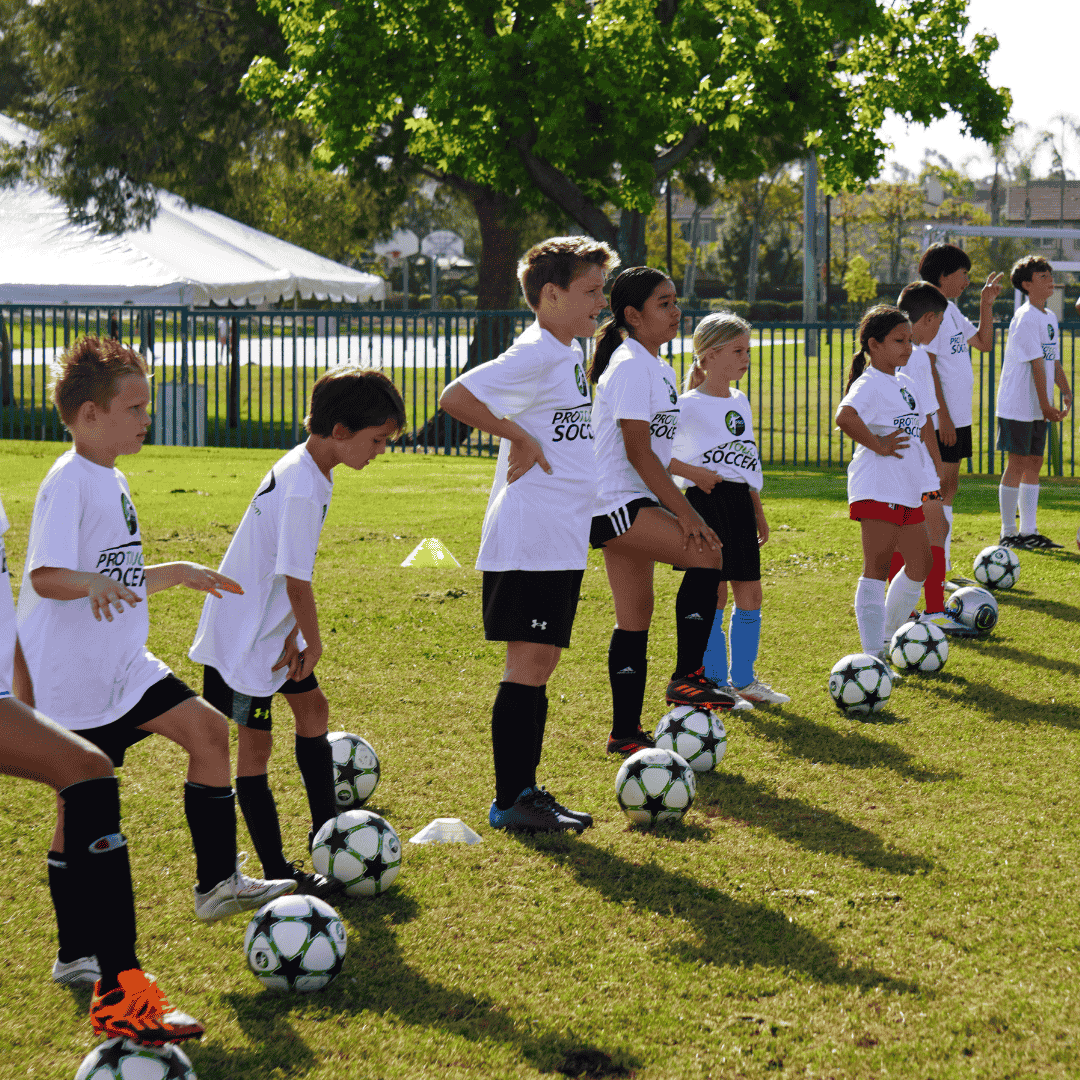
Why Some Kids Improve Faster Than Others in Soccer
It is something many parents notice, even if they do not always say it out loud.
Some kids seem to improve very quickly in soccer, while others take more time to build confidence, develop skills, and feel comfortable on the field.
One child suddenly looks sharper, more coordinated, and more confident. Another may still be working through the basics, even while putting in effort and showing up consistently.
It can be confusing to watch, especially for parents who simply want to understand how development works and how to best support their child.
But the truth is that young players do not all improve at the same speed, and that is completely normal.
Soccer development is not a race. It is a process shaped by many different factors, and some of the most important ones are not always obvious from the sidelines.
Confidence Changes Everything
One of the biggest reasons some kids appear to improve faster is confidence.
When a player believes in themselves, they tend to play more freely, take more risks, and recover from mistakes more quickly.
They ask for the ball more often. They try new moves. They stay engaged after something goes wrong instead of shutting down.
That confidence can make improvement look faster, not necessarily because the player is naturally more talented, but because they are more willing to keep learning in real time.
On the other hand, a child who is hesitant or afraid of mistakes may improve more quietly, even though they are fully capable of growing with the right support.
Repetition Builds Comfort
Players who improve quickly often have one important thing in common: they get a lot of quality repetition.
That does not always mean they train more hours than everyone else. It means they are regularly getting touches on the ball and repeating important skills with purpose.
Dribbling, passing, receiving, turning, and shooting all become stronger when players practice them again and again.
The more comfortable a child becomes with the ball, the more confident and relaxed they look during games and training.
Sometimes what looks like fast improvement is really just the result of steady repetition over time.
The Environment Matters More Than People Realize
Young players develop best in an environment that is positive, challenging, and supportive.
If a child feels encouraged, safe to make mistakes, and excited to learn, they are more likely to improve.
If they feel judged, pressured, or constantly compared, growth can slow down.
This is one reason two children with similar ability can develop very differently.
The right coaching, the right support at home, and the right atmosphere can make a major difference in how quickly a player grows.
Every Child Matures at a Different Pace
Not all improvement happens on the same timeline.
Some children develop coordination, body control, focus, and confidence earlier than others. Some need a little more time before things begin to click.
This is true in school, in sports, and in life.
In soccer, that means one player may look advanced at the moment, while another may still be building the foundation that leads to future growth.
Parents should remember that early progress does not always predict long-term success, and slower progress does not mean lower potential.
Mindset Plays a Major Role
Players who improve faster often respond to challenges in a healthier way.
They do not see mistakes as proof that they are failing. They see them as part of learning.
This kind of mindset helps children keep going when training feels difficult or when a game does not go their way.
Meanwhile, a player who becomes frustrated easily or starts doubting themselves may take longer to show visible progress.
Mindset is not fixed. It can be developed, and when it improves, overall development often grows with it.
Consistency Beats Occasional Big Efforts
Another reason some children improve faster is that they are simply more consistent over time.
They keep showing up. They keep practicing. They keep listening, learning, and building habits week after week.
Improvement in youth soccer usually comes from small efforts repeated regularly, not from one big performance or one intense week of training.
Even ten focused minutes at home a few times a week can make a difference when done consistently.
Children who build strong habits often make steady progress that becomes more noticeable over time.
Comparison Can Create the Wrong Message
It is natural for parents to compare, especially when they want to understand where their child stands.
But comparison can quickly become unhelpful.
Every child has a different personality, timeline, learning style, and response to challenge. Looking only at who is ahead right now can distract from what your own child truly needs.
The better question is not, “Why is that player improving faster?”
The better question is, “What does my child need most right now to keep growing?”
Final Thoughts
Some kids improve faster than others in soccer, but that does not mean they are the only ones with potential.
Development depends on many factors, including confidence, repetition, environment, mindset, maturity, and consistency.
When parents understand that growth is not always linear, they can support their child with more patience, perspective, and encouragement.
At Pro Touch Soccer, we believe every player can improve in the right environment, and that long-term development is about much more than who looks strongest in the moment.
The goal is not to rush the process. The goal is to help each child build the skills, confidence, and love for the game that allow them to keep growing over time.